| Sign In | Join Free | My esadidasol.com |
|
| Sign In | Join Free | My esadidasol.com |
|
| Categories | Resistance Wire |
|---|---|
| Brand Name: | DLX |
| Model Number: | Nichrome Wire Cr10Ni90 |
| Certification: | Ce,Rohs |
| Place of Origin: | China,Jiangsu |
| MOQ: | 10kg |
| Payment Terms: | L/C,D/A,D/P,T/T,Western Union |
| Supply Ability: | 7-10 work days |
| Delivery Time: | 500 tons per month |
| Company Info. |
| Changzhou DLX Alloy Co., Ltd. |
| Verified Supplier |
| View Contact Details |
| Product List |
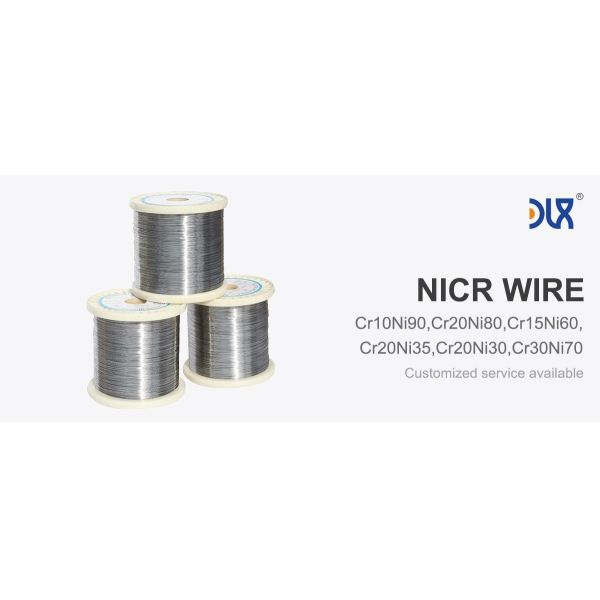
As the world moves toward a cleaner, more sustainable energy future, hydrogen production through water electrolysis has gained significant attention. Electrolysis, which uses electricity to split water into hydrogen and oxygen, is considered one of the most promising methods for generating green hydrogen. At the heart of this process lies the need for high-quality materials that can withstand the demanding conditions of electrolysis systems. Durable Cr10Ni90 Wire, composed of 10% chromium and 90% nickel, is fast becoming the material of choice for large-scale electrolytic hydrogen production due to its remarkable durability, corrosion resistance, and electrical conductivity.
At DLX, we are proud to offer top-tier Cr10Ni90 Wire specifically designed to meet the rigorous demands of industrial electrolysis applications. Whether you're looking to scale up your hydrogen production or improve the performance of your existing systems, DLX's Cr10Ni90 Wire offers the reliability and efficiency you need.
The Cr10Ni90 Wire is an advanced alloy made from 10% Chromium and 90% Nickel, offering superior resistance to corrosion and high-temperature stability. This wire is specifically engineered to function as the key electrode material in large-scale electrolyzers, where hydrogen is produced by splitting water molecules. The wire's exceptional mechanical properties make it highly suitable for industrial electrolysis processes, which involve continuous, high-efficiency operations in harsh electrolytic environments.
The Cr10Ni90 Wire is designed to ensure optimal performance in both alkaline electrolysis and proton-exchange membrane (PEM) electrolysis systems. With high melting points, excellent electrical conductivity, and exceptional resistance to corrosion, this alloy is the go-to material for efficient and long-lasting hydrogen production systems.
| Performance material | Cr10Ni90 | Cr20Ni80 | Cr30Ni70 | Cr15Ni60 | Cr20Ni35 | Cr20Ni30 |
|---|---|---|---|---|---|---|
| Composition | Ni: 90 | Rest | Rest | 55.0~61.0 | 34.0~37.0 | 30.0~34.0 |
| Cr | 10 | 20.0~23.0 | 28.0~31.0 | 15.0~18.0 | 18.0~21.0 | 18.0~21.0 |
| Fe | ≤1.0 | ≤1.0 | Rest | Rest | Rest | |
| Maximum temperature℃ | 1300 | 1200 | 1250 | 1150 | 1100 | 1100 |
| Melting point ℃ | 1400 | 1400 | 1380 | 1390 | 1390 | 1390 |
| Density g/cm³ | 8.7 | 8.4 | 8.1 | 8.2 | 7.9 | 7.9 |
| Resistivity(μΩ*m,20℃) | 1.09±0.05 | 1.18±0.05 | 1.12±0.05 | 1.00±0.05 | 1.04±0.05 | |
| Elongation at rupture | ≥20 | ≥20 | ≥20 | ≥20 | ≥20 | ≥20 |
| Specific heat(J/g.℃) | 0.44 | 0.44 | 0.44 | 0.44 | 0.44 | 0.44 |
| Thermal conductivity(KJ/m.h℃) | 60.3 | 45.2 | 45.2 | 43.8 | 43.8 | |
| Coefficient of linear expansion (20~1000℃) | 18 | 17 | 17 | 19 | 19 | |
| Micrographic structure | Austenite | Austenite | Austenite | Austenite | Austenite | |
| Magnetic properties | Nonmagnetic | Nonmagnetic | Nonmagnetic | Nonmagnetic | Nonmagnetic |
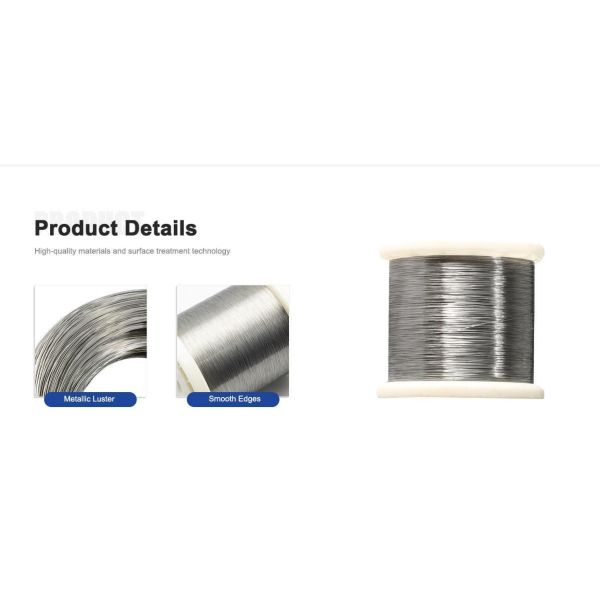

The global energy landscape is undergoing a major shift toward renewable energy, and hydrogen is at the forefront of this transition. As a clean and versatile fuel, hydrogen is expected to play a pivotal role in reducing carbon emissions, particularly in industries like transportation, power generation, and industrial manufacturing.
Water electrolysis is a key method for producing hydrogen, and as the demand for hydrogen increases, the need for efficient and reliable electrolysis systems will grow as well. This, in turn, drives the demand for materials that can perform well under challenging conditions, such as Cr10Ni90 Wire. With its superior performance in both alkaline and PEM electrolysis systems, Cr10Ni90 is rapidly becoming the material of choice for large-scale hydrogen production.
Governments around the world are investing heavily in hydrogen infrastructure, with plans to scale up production and distribution. This global trend is not only driving demand for electrolysis systems but also creating a need for high-quality materials like Cr10Ni90 that can ensure efficiency, sustainability, and cost-effectiveness.
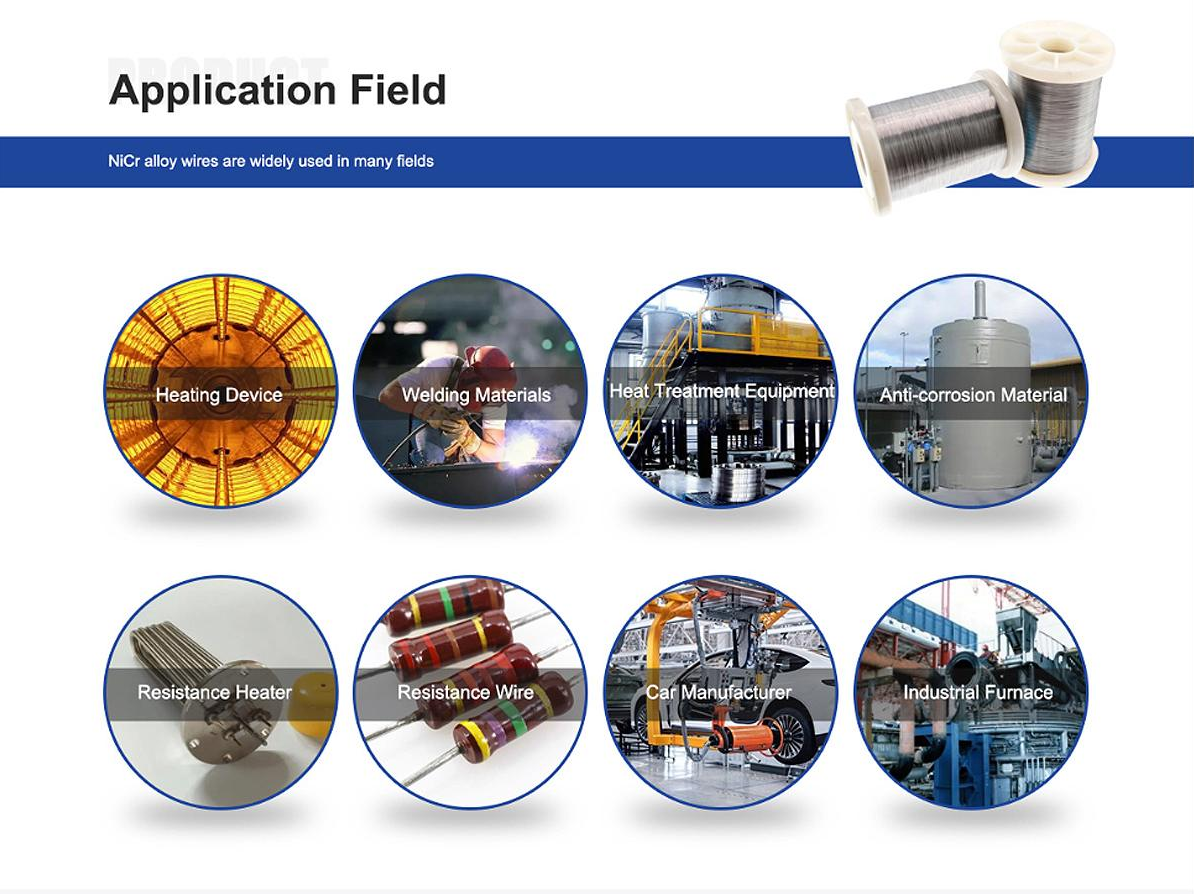

At DLX, we understand the critical role that materials play in optimizing hydrogen production systems. Whether you're working on a small-scale project or scaling up to large industrial electrolyzers, DLX's Cr10Ni90 Wire offers the ideal combination of durability, corrosion resistance, and electrical conductivity.


|
 Cr10Ni90 Nichrome Wire for Sustainable Hydrogen Generation via Electrolysis
Cr20Ni80 Nichrome Wire for Reliable Hydrogen Electrolysis Applications
High-Performance Cr20Ni80 Resistance Wire for Water Splitting Hydrogen Generation
Cr20Ni80 Alloy Wire for Optimal Electrolytic Hydrogen Production
Long-Lasting Cr20Ni80 Nichrome Wire for Efficient Electrolysis Systems
Cr20Ni80 Wire for Electrolytic Hydrogen Production in Renewable Energy Solutions
Cr30Ni70 Nichrome Wire for Efficient Hydrogen Production in Electrolysis
Cr30Ni70 Alloy Wire for Cost-Effective Electrolytic Hydrogen Generation
Reliable Cr30Ni70 Resistance Wire for Water Electrolysis Systems
Cr30Ni70 Wire for High-Efficiency Electrolysis and Hydrogen Generation
Cr10Ni90 Nichrome Wire for Sustainable Hydrogen Generation via Electrolysis
Cr20Ni80 Nichrome Wire for Reliable Hydrogen Electrolysis Applications
High-Performance Cr20Ni80 Resistance Wire for Water Splitting Hydrogen Generation
Cr20Ni80 Alloy Wire for Optimal Electrolytic Hydrogen Production
Long-Lasting Cr20Ni80 Nichrome Wire for Efficient Electrolysis Systems
Cr20Ni80 Wire for Electrolytic Hydrogen Production in Renewable Energy Solutions
Cr30Ni70 Nichrome Wire for Efficient Hydrogen Production in Electrolysis
Cr30Ni70 Alloy Wire for Cost-Effective Electrolytic Hydrogen Generation
Reliable Cr30Ni70 Resistance Wire for Water Electrolysis Systems
Cr30Ni70 Wire for High-Efficiency Electrolysis and Hydrogen Generation

